Mountain River Floral Hill: A Designer's Real-World Review
When I first opened the Mountain River Floral Hill design file, my immediate reaction wasn't about the technical specs or the list of included formats. It was about the mood. There is a distinct serenity to this piece that feels less like a generic nature clipart and more like a quiet moment captured in thread. As someone who has stitched thousands of designs for clients ranging from local boutiques to large-scale commercial brands, I know that the difference between a "nice looking" graphic and a truly successful embroidery project often comes down to flow and balance.
This isn't just another digital download; it is a tool meant to elevate a handmade product. Whether you are an Etsy seller looking to expand your catalog or a hobbyist preparing a special gift, understanding how a design translates from screen to fabric is critical. In this review, I am stepping away from the marketing copy to look at Mountain River Floral Hill through the lens of practical application, stitch density, and real-world durability.
The First Impression: Mood and Visual Flow
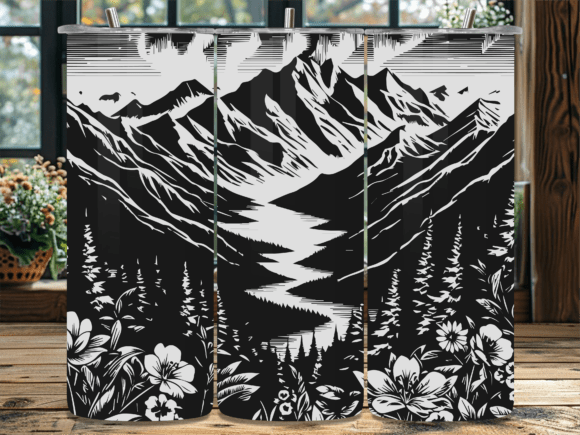
The name itself suggests a narrative, and the design delivers on that promise. The composition balances organic curves with structured elements, creating a visual path that guides the eye naturally across the canvas. For an embroidery designer, the most important question is always: does this translate well when compressed into thread? Many floral designs fail because they rely too heavily on tiny details that disappear under the tension of a satin stitch or get lost in the texture of a knit fabric.
Mountain River Floral Hill avoids this trap. The lines appear robust enough to hold their shape even on slightly textured fabrics, yet delicate enough to maintain elegance. The layout feels spacious, which is a luxury in the world of machine embroidery where every millimeter counts. It creates a sense of breathing room that makes the finished product feel premium rather than cluttered. This kind of visual personality is exactly what separates a mass-produced item from a boutique-quality piece.
Real-World Application: From Concept to Finished Product
Let's imagine a specific scenario. You are prepping for a holiday market season, and you want to create a line of personalized kitchen towels. These items need to be durable, washable, and visually striking. When I visualize Mountain River Floral Hill on a heavy cotton tea towel, the design sings. The contrast between the floral elements and the river motif would pop beautifully against a natural linen or a crisp white background.
However, the versatility extends far beyond kitchen linens. Consider a custom sweatshirt for a local hiking club. The relaxed fit of a sweatshirt provides ample surface area for this wrap-style design. Unlike smaller motifs that might get lost on a chest pocket, this design commands attention on the back of a garment or as a full-sleeve accent. It transforms a standard hoodie into a statement piece that customers will actually wear and show off.
I also see immense potential here for baby products. A onesie or a nursery pillow featuring this design would offer a sophisticated alternative to the typical bright primary colors. Parents often seek out "heirloom quality" items, and the refined aesthetic of Mountain River Floral Hill fits perfectly into that niche. It speaks to a desire for timeless beauty that won't look dated in five years.
Technical Considerations and Potential Pitfalls
While the design is beautiful, no professional reviewer would ignore the technical challenges. Embroidery is a medium of limitations. Even the most stunning graphic can fail if the physical constraints of the fabric and machine are ignored. Here is where careful planning becomes essential.
Hoop Size and Fabric Texture: If you plan to use this on a small hoop size, such as a cap brim or a narrow tote bag handle, you must scrutinize the fine details. Textured fabrics like terry cloth or bouclé can swallow up intricate stitches, turning sharp lines into blurry blobs. Similarly, stretchy knits require extra care with stabilizers to prevent puckering, which can distort the flow of the hills and rivers.
Density and Stitch Types: While the file includes various formats, the actual stitch density depends on how the design is digitized. Areas with high fill stitch density may not lay flat on thin fabrics, potentially causing the material to pucker around the design. On dark fabrics, the thread color contrast becomes the deciding factor. A light-colored floral design on a black shirt might lose definition if the thread count isn't high enough to cover the base fabric completely.
Curved Surfaces: If you intend to place this on a curved surface like a baseball cap, the distortion inherent in the curvature must be accounted for during digitizing. A design that looks perfect on a flat screen might look stretched or squashed once wrapped around a dome. Always test on scrap fabric before committing to the final customer product.
Elevating Brand Value and Customer Trust
In the world of Crafts and Graphics, perception is reality. Customers buying from a small shop or an independent maker are paying for quality and attention to detail. A sloppy stitch job or a design that doesn't align properly can instantly erode trust. Conversely, a clean, well-executed design like Mountain River Floral Hill signals professionalism.
When a customer receives a personalized gift or a custom apparel item, the tactile experience matters. The design should feel integrated into the fabric, not just printed on top of it. By choosing a design with strong visual integrity, you ensure that the finished product holds its value. This is crucial for commercial embroidery projects where repeat business depends on consistency. If your brand is known for high-quality, thoughtfully designed items, using assets that reflect that standard is non-negotiable.
Practical Notes for the Discerning Designer
Before you hit the "stitch" button, there are several steps every seasoned creator takes to ensure success. Do not skip these checks, regardless of how confident you are in the file.
- Test on Scrap: Always run a test stitch on a piece of scrap fabric that matches your final material. Check for puckering, thread breaks, and coverage issues.
- Stabilizer Selection: Match your stabilizer to the weight of your fabric. Heavy designs on light fabric need heavy support; otherwise, the design will shift or warp.
- Thread Color Contrast: Review your thread palette. Ensure the colors chosen provide enough contrast to make the details visible without being jarring.
- Licensing Verification: Confirm the licensing terms clearly. Are you allowed to sell finished products made with this design? Does the license cover commercial use for your own business?
- Mockup Testing: Create black and white mockups to see how the design reads without the distraction of color. This helps identify any structural weaknesses in the layout.
Finally, remember that Mountain River Floral Hill is a digital asset intended to facilitate creativity, not replace it. The magic happens when you combine this design with your unique vision, your choice of materials, and your personal touch. Whether you are producing a single embroidered patch for a friend or a batch of tote bag designs for an upcoming craft fair, taking the time to evaluate the design's strengths and limitations will pay off in the quality of your work.
For those of us who treat our craft as a profession, every element matters. This design offers a solid foundation for building something beautiful, provided we approach it with the right tools and the right mindset. It is a reminder that good design is not just about how it looks on a screen, but how it stands up to the rigors of real life.