Floral Butterfly Silhouette Vector Art: A Designer's Review
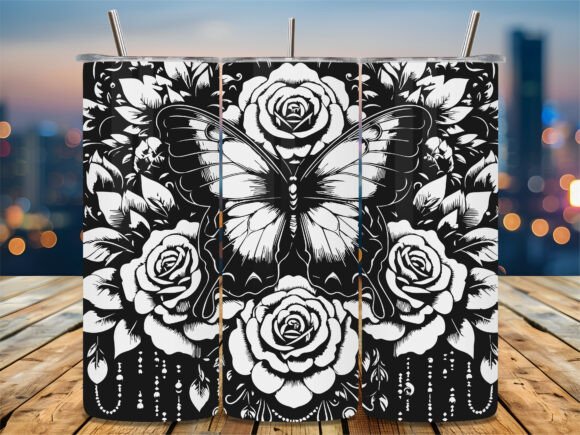
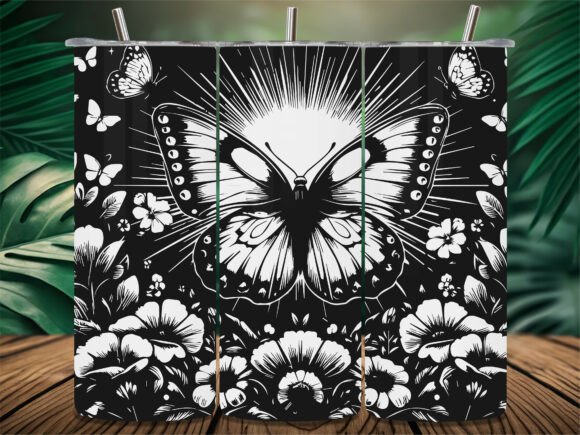
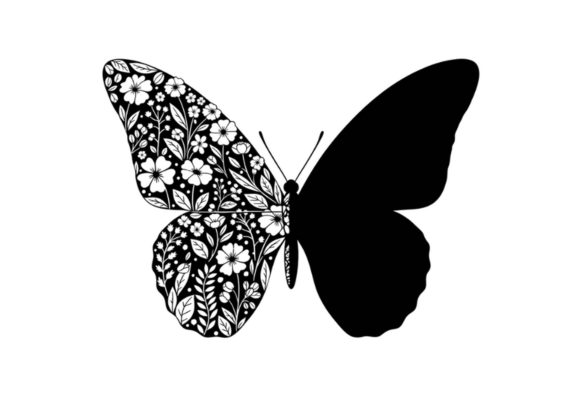
When I first opened the file for Floral Butterfly Silhouette Vector Art, my immediate reaction was one of quiet appreciation. As someone who spends hours tweaking stitch paths and worrying about thread breaks, I don't often get excited by simple shapes. However, this design struck a chord because it understands the balance between negative space and form. It isn't just a butterfly; it is a silhouette that hints at floral details within its wings, creating a mood that is both organic and structured. For an embroidery designer, that distinction is everything. It suggests a project that will look clean on a machine without requiring excessive digitizing to make sense.
The visual personality of this piece feels right at home in the world of handmade goods. It carries a softness that works beautifully for nursery decor or baby clothes, yet it retains enough graphic weight to stand out on custom apparel like tote bags or aprons. When you hold a finished product up to the light, the difference between a generic clip art and a well-thought-out vector becomes obvious. This design has a professional polish that elevates the perceived value of any handmade product it adorns. Whether you are an Etsy seller looking to boost your shop's aesthetic or a boutique owner curating a specific collection, this Floral Butterfly Silhouette Vector Art offers a versatile foundation that says "quality" before a single word is read.
From Digital File to Finished Product
Let me take you through a real scenario I recently faced while preparing for a holiday craft fair. I needed a central motif for a line of personalized embroidered patches and small kitchen towels. The goal was to create items that felt cohesive but not overly complicated to produce. I pulled up Floral Butterfly Silhouette Vector Art as a test case. My thought process wasn't just about how it looked on the screen, but how it would translate into a physical object after running through the hoop.
In this context, the silhouette aspect is a massive advantage. Unlike intricate line art that can get lost in dense stitching, a solid shape allows the thread color to do the heavy lifting. I imagined using a high-quality cotton thread in a deep sage green against a cream-colored tea towel. The contrast would be sharp, and the floral details inside the butterfly wings would catch the light subtly, adding depth without cluttering the design. For a tote bag design, this same approach would work wonders. A large, centered silhouette on a canvas bag creates a statement piece that customers can recognize instantly from across a room.
I also considered how this design would perform on curved surfaces, like a baseball cap. While many complex designs struggle on the curve of a hat, the clean lines of a silhouette tend to follow the contour naturally. The lack of tiny, jagged edges means there is less risk of the thread bunching up on the fabric texture. This makes it an excellent candidate for sweatshirt embroidery where comfort and drape matter. If the design were too dense or had too many sharp corners, it might feel stiff against the skin. Here, the fluidity of the butterfly shape ensures the finished product remains wearable and soft.
Navigating Fabric and Stitch Density
While the design is strong, a responsible reviewer must address where it needs careful handling. Not every fabric plays nice with every embroidery style, and knowing the limitations is part of being a pro. If you plan to use this for commercial embroidery on thin, stretchy fabrics like jersey or lightweight rayon, you need to be strategic. A silhouette relies on a solid fill, which can sometimes pull on delicate materials if the stitch density is too high.
For projects involving baby embroidery on onesies or soft blankets, I would recommend testing the stabilizer choice carefully. You want to avoid a stiff backing that makes the garment uncomfortable. Using a cut-away stabilizer might provide the necessary support for the fill stitches, but a tear-away could suffice depending on the fabric weight. Also, consider the thread colors. On dark fabrics, a white or light-colored silhouette might require an underlay that adds bulk. In those cases, the design might benefit from an applique approach rather than a direct satin stitch fill, turning the Floral Butterfly Silhouette Vector Art into an applique design where a contrasting fabric is stitched down first.
There are also specific scenarios where caution is advised. Small hoop sizes are a common pitfall. If you try to fit this design into a 4x4 inch area without scaling it down, the floral details inside the wings might become indistinguishable blobs of thread. Conversely, on very large garments, the design might look sparse if not balanced with other elements. Textured fabrics like terry cloth or boucle can hide the fine lines of the silhouette, so testing on scrap fabric is non-negotiable. I always advise checking whether the design works for both personal and commercial projects by reviewing the license terms, especially if you are selling small shop products.
Practical Notes for the Design Professional
Before you commit to a full production run, here are the steps I take to ensure success with designs like this. First, always inspect the small details. Zoom in on the SVG or EPS file to see if the vector paths are closed properly. Open gaps in the path can lead to messy jumps in the machine. Second, review the stitch density settings in your digitizing software. If the software defaults to a standard density, you might need to adjust it based on the thread type you are using. Thicker threads may require looser spacing to prevent breakage.
Another critical step is to test it in black and white mockups. This helps you visualize the impact of the design without the distraction of color. Does the shape hold up? Is the balance of positive and negative space pleasing? Once you have confirmed the structure, compare light and dark fabric backgrounds. Sometimes a design looks perfect on white but disappears on navy blue unless you change the thread palette. For a holiday gift or a wedding gift, the thread choice can completely shift the mood from festive to elegant.
If you are an Etsy seller or a craft business owner, remember that your printable mockup should reflect reality. Don't over-saturate the image. Show the texture of the fabric and the slight sheen of the thread. Buyers appreciate honesty in presentation. When you present a digital embroidery file or a finished item, the consistency of your branding matters. Using a cohesive design like Floral Butterfly Silhouette Vector Art across your entire product line—from the main shirt to the tag—builds trust and recognition.
Finally, confirm licensing before selling finished items or digital products. Some files are for personal use only, while others allow commercial sales. This is a crucial detail for any creative entrepreneur. By taking the time to understand the technical requirements and the artistic potential of the file, you ensure that your final output meets the highest standards. Whether you are creating a unique embroidered patch or a batch of kitchen towels, this design offers a reliable starting point for a successful project.
In conclusion, Floral Butterfly Silhouette Vector Art is more than just a pretty picture. It is a functional tool that, when used with care and insight, can elevate your work from a hobbyist project to a professional offering. It fits seamlessly into the Crafts category, specifically within Graphics for designers who value clarity and versatility. By treating it with the respect it deserves during the digitizing and stitching process, you create a finished product that customers will love and cherish.